



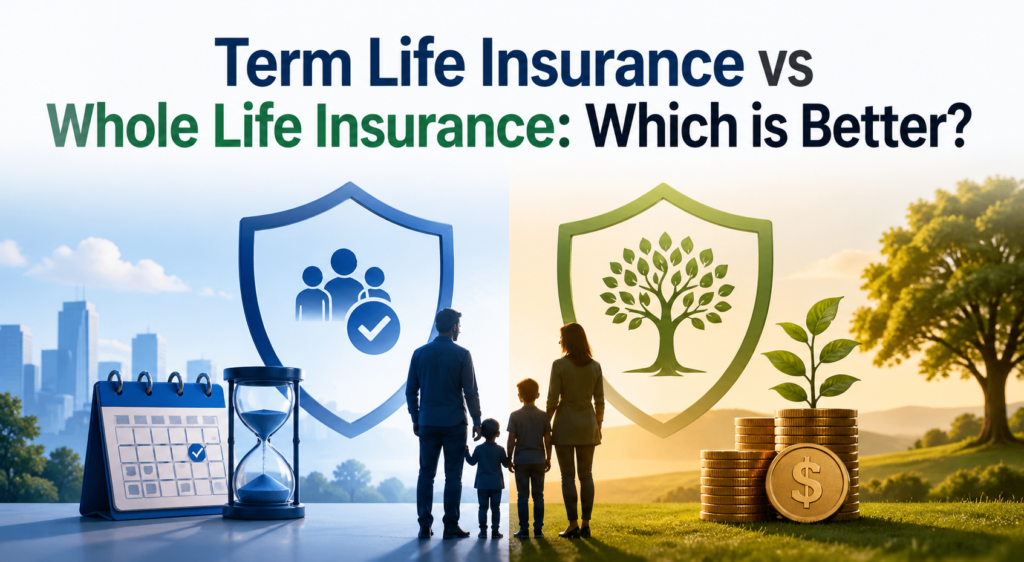
When it comes to protecting your family’s financial future, life insurance is one of the most important decisions you will ever make. But with so many policy types available, the debate between term life insurance vs whole life insurance often leaves Canadians overwhelmed. Which one offers better value? Which one suits your stage of life? And most critically — which one gives your loved ones the protection they truly deserve?
What Is Term Life Insurance?
Term life insurance is the most straightforward form of life insurance available in Canada. As the name suggests, it provides coverage for a specific term — typically 10, 20, or 30 years. If you pass away during that term, your beneficiaries receive the death benefit, which is the tax-free lump sum payout specified in your policy.
Once the term expires, coverage ends unless you renew or convert the policy. Because term life insurance is purely protective with no investment component, it is significantly more affordable than permanent alternatives.
Key Features of Term Life Insurance:
- Fixed premiums for the duration of the term
- Pure death benefit — no cash value accumulation
- Renewable and convertible — most policies allow conversion to permanent insurance
- Coverage periods of 10, 20, or 30 years
- Lower monthly premiums, especially for younger, healthier applicants
Term life insurance is ideal for individuals who need maximum coverage at a minimum cost — for example, parents who want to ensure their mortgage is paid off and children are cared for if something unexpected happens.
What Is Whole Life Insurance?
Whole life insurance is a form of permanent life insurance that provides lifelong coverage — meaning it does not expire as long as premiums are paid. Beyond the death benefit, whole life policies accumulate a cash value over time, functioning as a savings or investment component that grows on a tax-deferred basis.
This cash value can be borrowed against, used to pay premiums, or even surrendered for cash. For this reason, whole life insurance is often described as a “two-in-one” financial product: protection plus a savings vehicle.
Key Features of Whole Life Insurance:
- Lifelong coverage — never expires
- Cash value accumulation that grows over time
- Level premiums that remain fixed throughout your life
- Guaranteed death benefit regardless of when you pass away
- Loan and withdrawal options against the cash value
- Higher premiums compared to term life
Whole life insurance is particularly appealing to those who want lifelong financial protection, are interested in estate planning, or want to leave a guaranteed inheritance for their heirs.
Term Life Insurance vs Whole Life Insurance: A Head-to-Head Comparison
To help you clearly see the differences, here is a side-by-side comparison of the two policy types:
| Feature | Term Life Insurance | Whole Life Insurance |
| Coverage Duration | Fixed term (10–30 years) | Lifetime |
| Premiums | Lower | Higher |
| Cash Value | No | Yes |
| Death Benefit | Paid if death occurs within term | Guaranteed payout |
| Flexibility | Renewable/convertible | Less flexible |
| Best For | Young families, mortgage protection | Estate planning, legacy building |
| Investment Component | No | Yes |
The Cost Factor: Which Is More Affordable?
One of the biggest deciding factors for most Canadians is cost. Term life insurance wins hands down when it comes to affordability. A healthy 30-year-old in Canada can obtain a $500,000 term life policy for as little as $20–$30 per month, while a comparable whole life policy could cost $300–$500+ per month.
However, “cheaper” does not always mean “better.” With term life insurance, your premiums disappear at the end of the term with nothing to show for them if you outlive the policy — much like renting a home versus buying. Whole life insurance, on the other hand, ensures that every dollar you pay contributes to both protection and long-term wealth accumulation.
The right choice depends on your current financial situation and long-term goals. Our experienced advisors at Top Choice Insurance can help you evaluate the best option based on your unique circumstances.
Who Should Choose Term Life Insurance?
Term life insurance is the smarter choice for many Canadians, particularly those in the following situations:
- Young Families with a Mortgage If you have a young family and a mortgage to pay off, term life insurance ensures that your dependents can continue living in your home and maintain their lifestyle if you pass away unexpectedly. A 20- or 25-year term aligned with your mortgage period is a practical and cost-effective solution.
- Parents of Young Children Raising children is expensive. A term policy can cover the cost of raising your children and funding their education until they become financially independent. You may even want to explore pairing your policy with a RESP (Registered Education Savings Plan) to maximise their educational future.
- Those on a Budget If you want the highest possible coverage for the lowest possible premium, term life insurance offers unbeatable value during your peak earning and family-raising years.
- Business Owners Business owners often use term life insurance to cover key-person insurance or to protect business loans, ensuring the company remains viable even in the event of an untimely death.
Who Should Choose Whole Life Insurance?
Whole life insurance is the preferred choice for individuals with longer-term financial planning goals:
- High-Net-Worth Individuals For those looking to transfer wealth efficiently to the next generation, whole life insurance offers a tax-efficient, guaranteed death benefit that can serve as a powerful estate planning tool.
- People Who Want Guaranteed Coverage With term life insurance, there is a risk that you outlive your policy and are left uninsured. Whole life insurance eliminates this risk entirely, providing peace of mind that your family will always be protected.
- Conservative Investors The cash value component of whole life insurance grows at a guaranteed, conservative rate — making it an appealing option for those who prefer stable, tax-sheltered growth. This can complement other investment vehicles like a TFSA (Tax-Free Savings Account) or an RRSP.
- Those With Lifelong Dependants If you have a child with a disability or a dependent who will require financial support indefinitely, whole life insurance ensures there will always be funds available regardless of when you pass.
The “Buy Term and Invest the Difference” Strategy
A popular financial strategy in Canada involves purchasing an affordable term life policy and investing the money saved on premiums into other financial instruments. For example, if a whole life policy costs $350/month and a comparable term policy costs $30/month, you could invest the $320 difference into a TFSA or RRSP to build wealth independently.
This strategy works well for disciplined investors who are confident they will consistently invest the difference and generate solid returns. However, it requires financial discipline and carries market risk — unlike the guaranteed cash value growth of whole life insurance.
Can You Have Both? The Combined Approach
Interestingly, many Canadians choose to have both a term policy and a whole life policy simultaneously. A common approach is to purchase a whole life policy for a modest base amount (for estate planning purposes) and layer a term policy on top for additional protection during the high-responsibility years of raising a family and paying a mortgage.
This hybrid approach provides both the affordability of term coverage and the permanence of whole life protection.
Don’t Overlook These Complementary Coverages
Life insurance is only one piece of a comprehensive financial protection plan. There are other critical coverages worth considering alongside your life insurance policy:
- Disability Insurance: Your greatest financial asset is your ability to earn an income. Disability insurance replaces your income if illness or injury prevents you from working — a coverage many Canadians overlook until it is too late.
- Critical Illness Insurance: A diagnosis of cancer, heart attack, or stroke can be devastating financially. Critical illness insurance provides a lump-sum payout upon diagnosis, giving you financial flexibility during recovery.
These products work hand-in-hand with your life insurance policy to create a robust financial safety net for you and your family.
Which Is Better: Term or Whole Life?
The honest answer is: it depends on you.
- If you need maximum coverage at an affordable price for a defined period — choose term life insurance.
- If you want lifelong protection, cash value, and estate planning benefits — choose whole life insurance.
- If you want the best of both worlds — consider a combined strategy tailored by an expert.
There is no universal answer because every Canadian has a different income, family structure, debt level, and long-term goal. The key is to make an informed decision with the help of a licensed professional who puts your interests first.
Get Expert Guidance From Top Choice Insurance
Choosing between term life and whole life insurance does not have to be complicated. At Top Choice Insurance, our licensed brokers take the time to understand your unique needs, assess your financial situation, and recommend the policy that truly fits your life — not just the one that sounds good on paper.
Frequently Asked Questions (FAQs): Term Life Insurance vs Whole Life Insurance
What is term life insurance?
Term life insurance is a policy that provides coverage for a fixed period, such as 10, 20, or 30 years. If you pass away during that period, your family receives the death benefit. If you outlive the term, the coverage ends.
What is whole life insurance? Whole life insurance is a permanent policy that covers you for your entire life. It also builds a cash value over time that you can borrow against or withdraw.
Which is cheaper — term or whole life?
Term life insurance is much cheaper. It offers pure protection with no savings component, which keeps premiums low. Whole life costs more because it includes lifelong coverage and a cash value feature.
Which is better for a young family?
Term life insurance is usually the better fit for young families. It provides high coverage at an affordable price during the years when financial responsibilities — mortgages, childcare, education — are greatest.
Does whole life insurance have a savings component?
Yes. A portion of your whole life premium grows as cash value over time. You can borrow against it or use it in retirement. It is a slow but guaranteed form of savings.
What happens when a term policy expires?
When your term ends, coverage stops. Most policies give you the option to renew at a higher premium, convert to a permanent policy, or simply let it lapse if you no longer need coverage.
Can I switch from term to whole life insurance? Yes. Most term policies include a conversion option that lets you switch to a whole life policy without a new medical exam. This is useful if your health changes during your term.
Is the life insurance payout taxable in Canada?
No. In Canada, life insurance death benefits paid to a named beneficiary are completely tax-free, making it one of the most efficient ways to pass money on to your loved ones.
How much life insurance do I need?
A general guideline is 7 to 10 times your annual income. However, the right amount depends on your debts, number of dependents, spouse’s income, and future expenses like your children’s education.
Can I have both term and whole life insurance at the same time?
Yes. Many Canadians hold both types simultaneously — a whole life policy as a permanent foundation and a term policy for extra coverage during high-responsibility years. It is a perfectly legal and effective strategy.

We want to be your insurance broker. We provide personal, high-quality service and offer policies in all areas of insurance – Critical, Disability, Health and Dental, Travel and domestic requirements using only authorized Canadian-based insurers.